Contest day has a way of making everybody a little different.
The loud person may suddenly get quiet.
The person who usually jokes around may stare out the window.
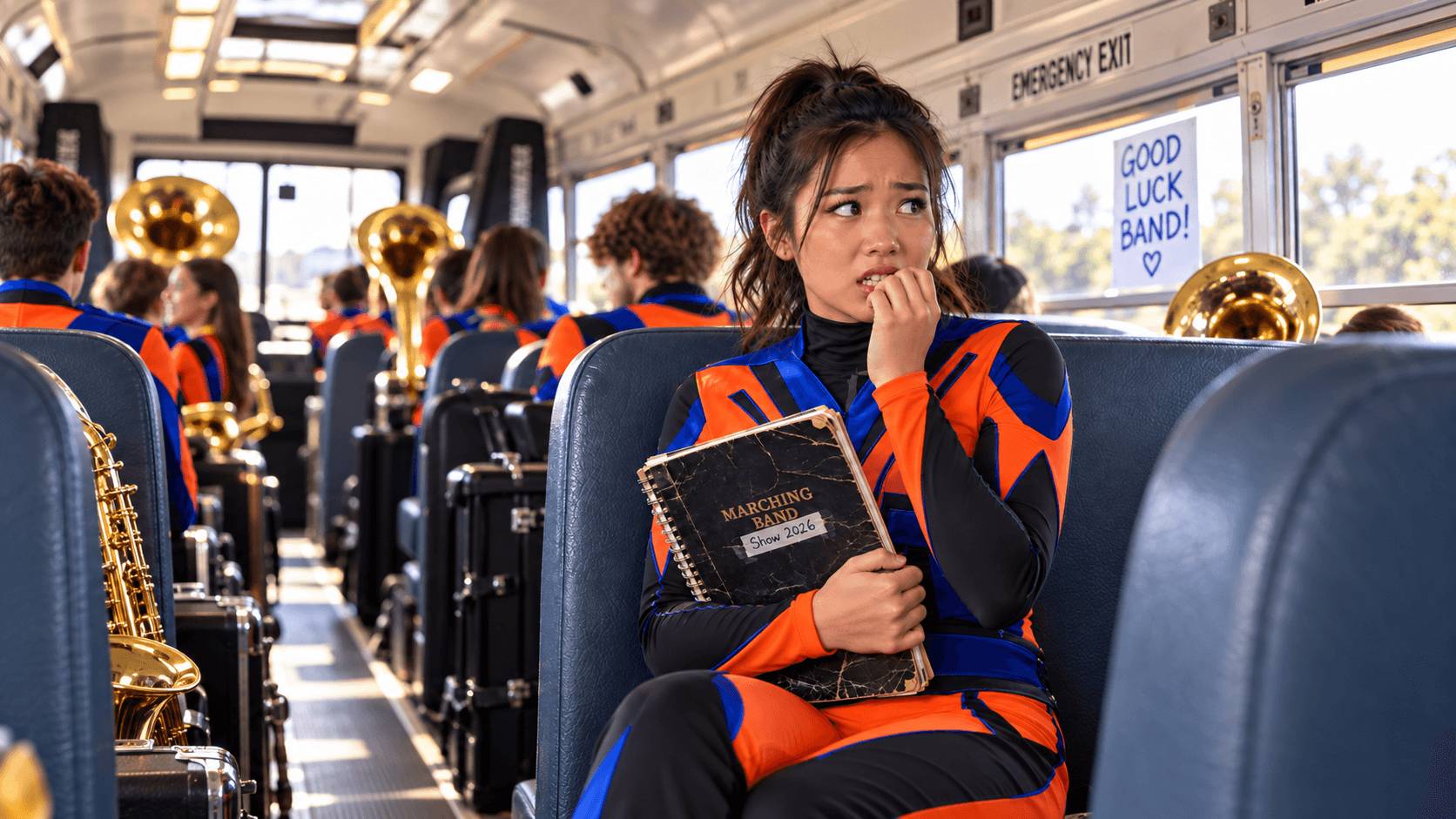
Someone may check the same zipper three times.
Someone else may keep tapping a foot, twisting a ring, or looking down at the floor.
You may notice it.
Or you may be so busy thinking about your own nerves that you miss it.
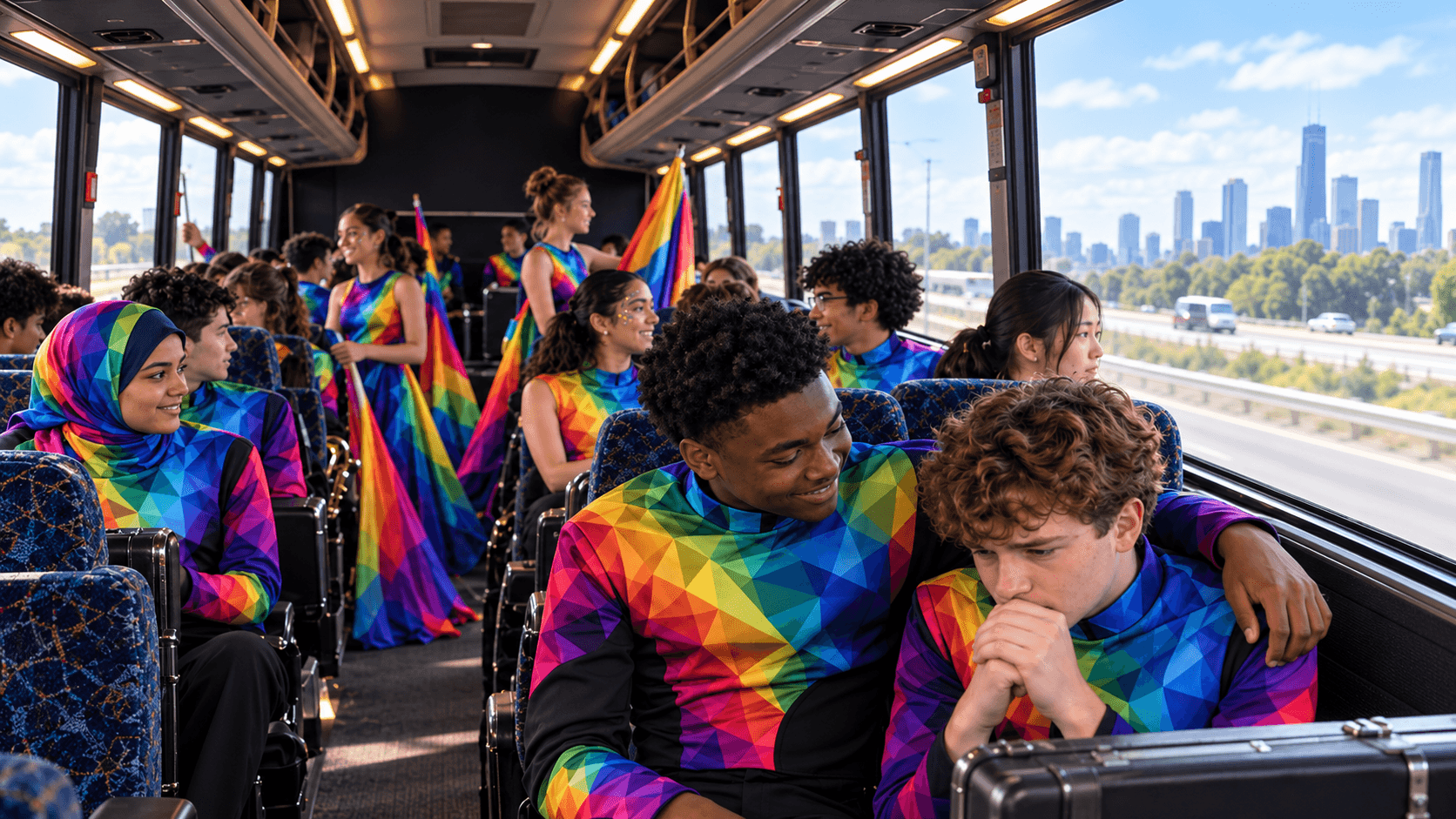
But today, on this bus, the person sitting beside you may need you.
Not because you have the perfect speech.
Not because you know exactly what to say.
They may simply need to know they are not alone.
Look Around
Before you put your headphones on.
Before you scroll through your phone.
Before you disappear into your own thoughts.
Look around.
Who seems unusually quiet?
Who is sitting by themselves?
Who looks nervous?
Who keeps taking deep breaths?
Who seems like they are trying very hard to look like they are fine?
You do not have to make a big deal out of it.
Sometimes all it takes is: “You good?” Or: “You ready?” Or: “You’ve got this.” Those are small words.
But on contest day, small words can feel very big.
You Do Not Have to Fix Anything
This is important.
If someone is nervous, your job is not to fix them.
You do not have to convince them not to be nervous.
You do not have to give advice.
You do not have to say, “There’s nothing to worry about.”
Because maybe there is something they are worried about.
Maybe they are afraid of a solo.
Maybe they missed rehearsal.
Maybe they are worried about making a mistake.
Maybe something happened at home.
Maybe they are tired.
Maybe they just need a minute.
Sometimes the best thing you can do is simply sit there and be kind.
Say Something Specific
General encouragement is good.
Specific encouragement can be even better.
Instead of: “You’ll be fine.” Try: “You sounded really good in rehearsal yesterday.” Or: “That section you were worried about looked a lot better last night.” Or: “I’m glad you’re next to me in the opener.” Or even: “I’m nervous too.”
There is something powerful about hearing that from another person.
It reminds us that we are not the only ones carrying feelings into the stadium.
Sometimes the Quiet Person
Needs an Invitation
Not everyone knows how to join in.
Maybe your group is laughing in the back of the bus.
Maybe somebody is sitting two rows away by themselves.
Invite them in.
Ask them to come sit with you.
Show them the ridiculous picture everybody is laughing about.
Ask them what they think about today’s show.
Tell them a joke.
Do not make it dramatic.
Just make room.
A tiny invitation can change somebody’s entire bus ride.
Pay Attention to the Person
Who Is Usually Strong
Sometimes we notice the people who are obviously nervous.
But the person who always seems confident may need encouragement too.
The section leader.
The drum major.
The soloist.
The senior.
The person everyone expects to have it together.
Strong people get nervous.
Leaders get scared.
Confident people have bad days.
Do not assume someone does not need encouragement just because they usually give it to everyone else.
Helping Someone Else Can Help You Too
Here is the strange part.
When you stop staring at your own nerves for a minute and focus on helping someone else, your own anxiety may soften.
You stop asking:
“What if I mess up?”
And start thinking:
“How can I help my friend feel better?”
That changes your focus.
You are no longer alone inside your own head.
You are connected to the people around you.
And that may be one of the healthiest places to be before a performance.
This Is What a Band Really Is
A marching band is not just people moving at the same tempo.
It is not just uniforms, instruments, flags, and drill.
It is people.
People learning together.
People getting frustrated together.
People laughing together.
People messing up together.
People recovering together.
People helping one another.
That is what makes a band feel like more than a class.
It becomes a group of people who know what the others have been through.
And on contest day, that matters.
Before You Step Off the Bus
Before the doors open, ask yourself one question:
Who might need me today?
Maybe it is the person beside you.
Maybe it is the freshman who looks terrified.
Maybe it is your best friend.
Maybe it is someone you hardly know.
You do not need a speech.
You do not need a plan.
You may only need to smile.
Say their name.
Ask if they are okay.
Tell them you are glad they are there.
Then go perform together.
Because sometimes the best thing you can do before stepping onto the field is help someone else feel a little less alone.